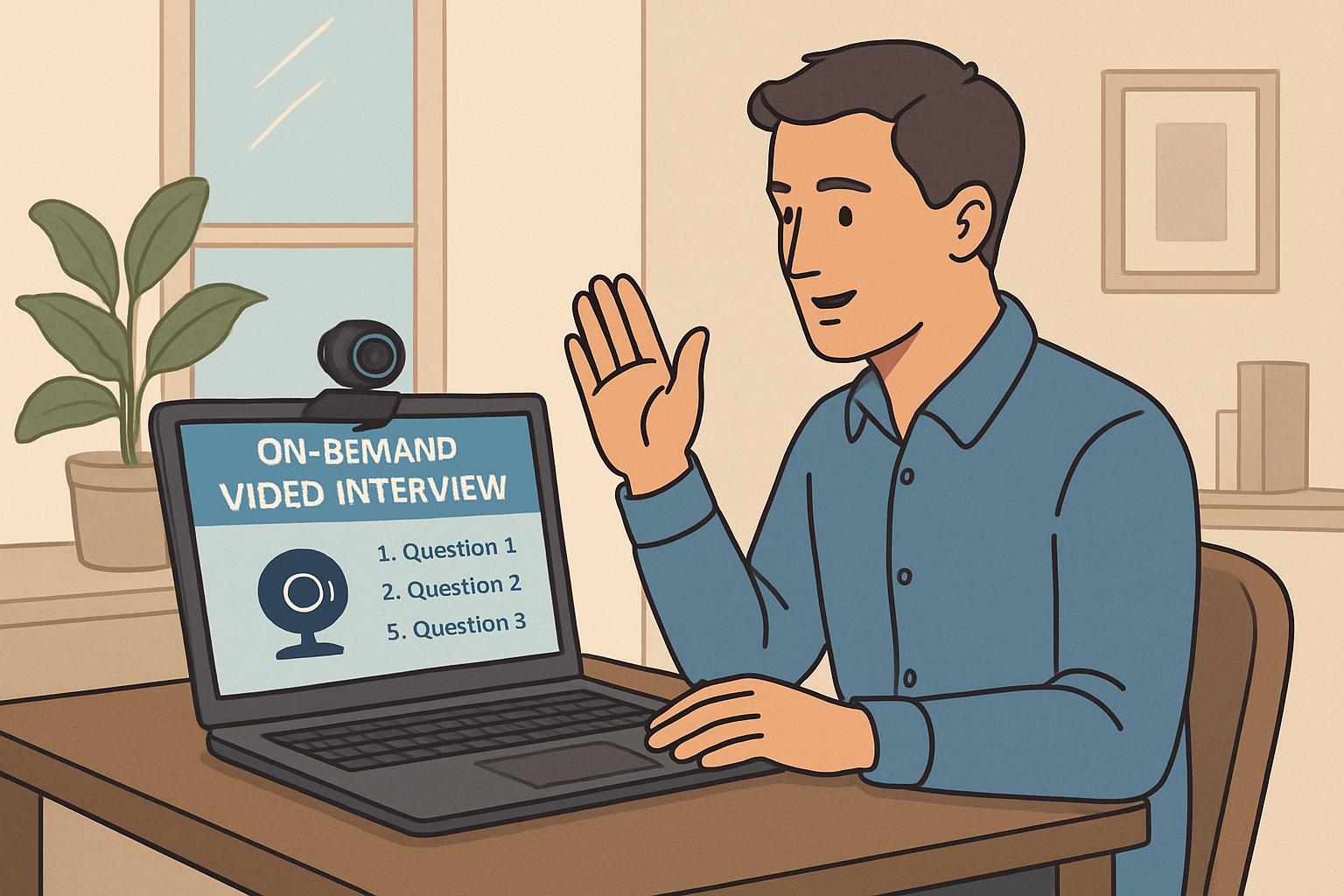
Asynchronous video interviews, also known as on-demand or one-way video interviews, are transforming the way companies screen candidates. Instead of a live conversation, you record your responses to preset questions. While this format offers flexibility for busy recruiters and global teams, it poses unique challenges: you must convey enthusiasm, clarity, and professionalism without real-time feedback.
Step 1: Understand the Format
Before you hit record, know what to expect and why employers use this method.
What Is an Asynchronous Interview?
In this process, candidates receive interview questions via a platform and record their answers within a time limit. Recruiters review these recordings on their own schedule.
Why Recruiters Choose On-Demand Video
- Efficiency: Screen more candidates quickly without coordinating calendars.
- Consistency: Ensure every applicant answers the same questions.
- Flexibility: Allow hiring teams across time zones to evaluate responses.
Step 2: Prepare Your Content
- Research the Role and Company. Review the job description and company values. Tailor your examples to their needs.
- Create Bullet-Point Notes. Outline your Situation, Task, Action, and Result to stay organized without reading a script.
- Practice Recording. Use your smartphone or computer to film mock answers. Review your pacing, tone, and clarity.
Step 3: Structure Answers with the STAR Method
The STAR framework ensures clear, impactful responses:
- Situation: Briefly set the scene.
- Task: Describe your responsibility.
- Action: Explain what you did.
- Result: Share the outcome or learning.
Example: “In my last role (Situation), I needed to improve website traffic by 15% (Task). I implemented an SEO audit and content calendar (Action), which boosted organic visits by 25% in three months (Result).”
Step 4: Optimize Your Setup
A polished recording environment and clear audio/video make a strong first impression.
- Lighting: Face a window or use a soft front lamp to avoid shadows.
- Background: Choose a neutral, uncluttered space.
- Camera Position: Align your webcam at eye level for direct “eye contact.”
- Audio Quality: Test your microphone; consider headphones with a built-in mic.
- Internet Connection: Close unused apps to ensure bandwidth.
Step 5: Deliver with Confidence
On-demand interviews can feel unnatural—inject energy and authenticity:
- Smile and nod: Show engagement even without a live interviewer.
- Maintain eye contact: Look at the camera lens, not the screen.
- Speak clearly: Moderate your pace and enunciate key points.
- Stay concise: Aim for 1–2 minutes per answer, following platform guidelines.
Trade-offs: Benefits and Challenges
Asynchronous interviews offer clear advantages but come with trade-offs:
| Benefits | Challenges |
|---|---|
| Flexible scheduling | No real-time clarification |
| Reduced travel | Higher pressure to perform solo |
| Consistent process | Less natural conversation |
Step 6: Review, Retake, and Submit
Most platforms allow retakes—use them wisely:
- Review Each Draft: Watch for filler words, background noise, or distracting gestures.
- Apply Improvements: Adjust your delivery or environment between takes.
- Confirm Upload: Ensure all videos are submitted correctly before the deadline.
Common Mistakes to Avoid
- Reading verbatim from notes or a script.
- Poor lighting or an overly busy background.
- Ignoring the time limit and rambling.
- Leaving notifications on or tabs open with distracting sounds.
Quick Prep Checklist
- Read platform instructions and time limits.
- Outline STAR bullet points.
- Set up lighting, background, and camera angle.
- Test audio and video quality.
- Practice a full mock interview.
- Retake until satisfied.
- Submit before the deadline.
Next Steps
Ready to showcase your best self in on-demand interviews? Explore Taluno’s job seeker tools to find roles that match your skills and follow our guide to automated interview scheduling.